Waiting for the bus when you have a car
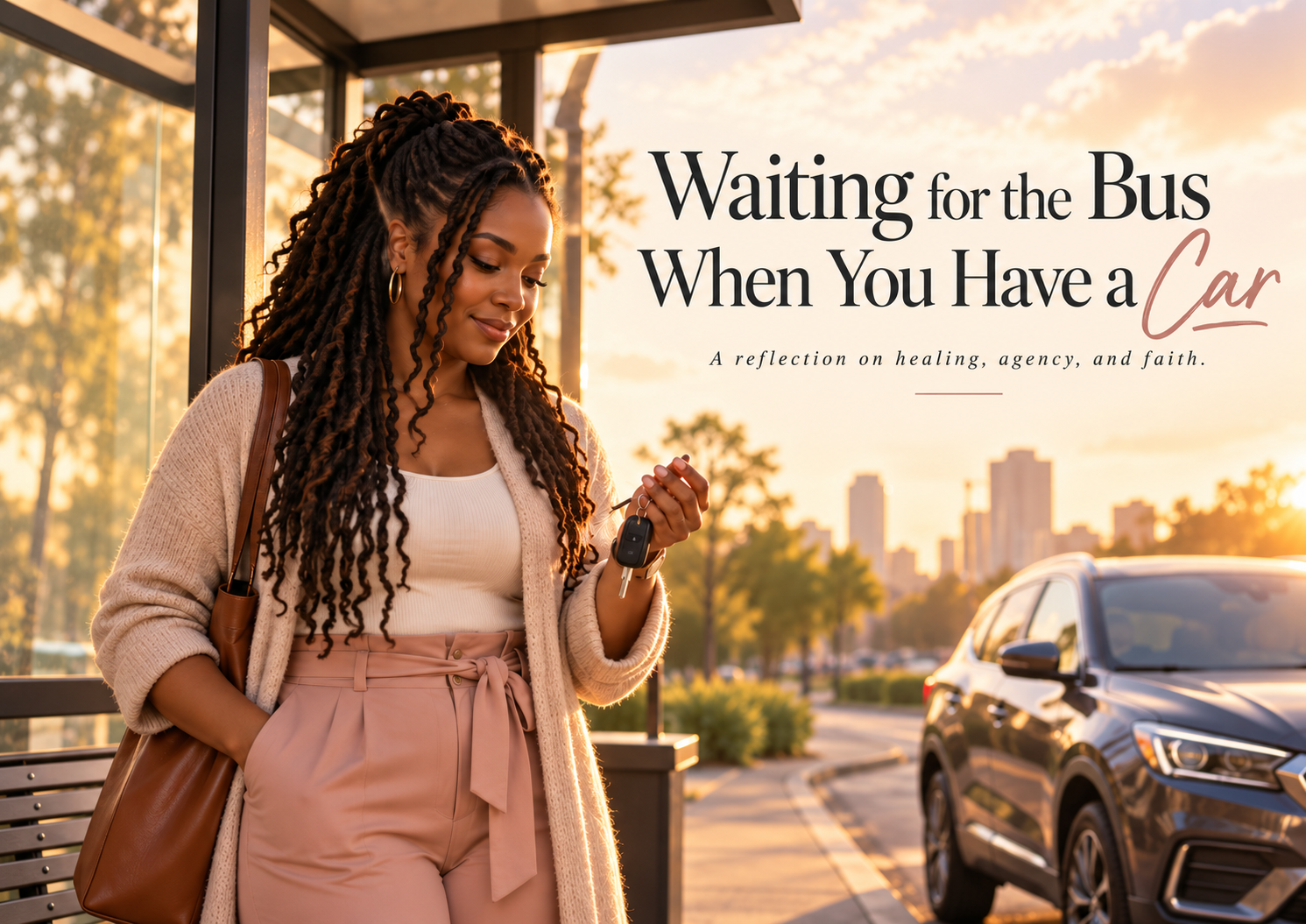
Waiting for the Bus When You Have a Car
There is nothing wrong with waiting for the bus when the bus is the only transportation available to you. You learn the route. You learn the schedule. You learn how early you need to arrive, how long you may have to wait, and how to adjust when the bus is late. Eventually, waiting becomes familiar.
But what happens when you get a car and still find yourself standing at the bus stop?
That is what healing can feel like.
There are coping strategies, relational patterns, emotional responses, and survival behaviors that once made complete sense. Avoidance may have protected you from conflict. Hypervigilance may have helped you anticipate danger. People pleasing may have reduced the likelihood of rejection. Shutting down may have been the safest way to survive environments where expressing yourself came with consequences. These responses were not developed randomly. They often emerged because, at some point, they worked.
The challenge is that the nervous system does not always automatically update itself when circumstances change.
You can leave the environment and still respond as though you are in it. You can become financially independent and still feel as though you need permission to make decisions. You can enter healthier relationships and still anticipate abandonment. You can learn how to set boundaries and still feel overwhelming guilt every time you use them. You can have more options than you once had and still instinctively behave as though your choices are limited.
In other words, you can have the keys and still be waiting at the bus stop.
From a mental health perspective, healing often requires developing awareness of the difference between a response that is still necessary and a response that has simply become familiar. Familiar does not always mean healthy, and discomfort does not always mean danger. Sometimes discomfort is simply evidence that you are practicing something new.
This is why insight alone is not always enough.
Knowing why you respond a certain way can be incredibly important, but healing also requires learning how to respond differently when the opportunity presents itself. Therapy may help a person identify patterns, challenge distorted beliefs, improve emotional regulation, strengthen boundaries, and develop greater tolerance for uncertainty. Over time, the goal is not to erase every survival response. The goal is to increase flexibility so that you are no longer limited to one way of coping.
You begin to recognize that you have choices now.
Maybe you do not have to chase someone for reassurance every time they become distant. Maybe you do not have to explain a boundary repeatedly for it to be valid. Maybe you do not have to remain silent simply because speaking honestly once felt unsafe. Maybe you do not have to wait for closure from someone else before deciding that a chapter is closed.
That realization can be both freeing and uncomfortable because agency comes with responsibility. Once you recognize that you have options, you also have to decide whether you are willing to use them.
Faith adds another layer to this process.
There are seasons when we pray for God to change our circumstances, remove obstacles, reveal direction, or create an opportunity. Sometimes the answer comes through an open door. Sometimes it comes through wisdom. Sometimes it comes through resources, relationships, boundaries, discernment, or the courage to make a decision we have been avoiding.
James 1:5 reminds us that if we lack wisdom, we can ask God for it. Proverbs 3:5–6 calls us to trust the Lord and acknowledge Him in our paths. Yet trusting God does not always mean remaining still indefinitely. Biblical faith repeatedly involves movement. Abraham went. Peter stepped out of the boat. The Israelites had to walk toward the sea before witnessing what God would do.
There are moments when prayer and action belong in the same sentence.
Sometimes we keep asking God for transportation while holding the keys He already placed in our hands.
That does not mean every decision is easy, every opportunity is safe, or every closed door should be forced open. Discernment still matters. Wise counsel matters. Therapy can matter. Prayer matters. Timing matters. But there is a difference between waiting on God and remaining emotionally immobilized because the familiar feels safer than the unknown.
Healing may require asking yourself difficult questions.
What am I still waiting for?
Whose permission do I believe I need?
What behavior am I tolerating because confrontation makes me uncomfortable?
What coping mechanism helped me survive but is now preventing me from fully living?
What has God already given me that I keep asking Him to provide again?
You may realize that you have been waiting for an apology before moving forward. Waiting for another person to recognize your value. Waiting for motivation before beginning. Waiting for fear to disappear before taking the first step.
But courage does not always arrive before movement. Sometimes courage develops because you moved while you were still afraid.
The goal is not to shame yourself for waiting. There were probably reasons you learned to wait. There may have been seasons when waiting protected you. Honor the version of yourself who did what they knew how to do with what they had.
Then look down.
You may discover that the keys have been in your hand for longer than you realized.
The bus served its purpose.
But you do not have to keep standing at the stop.
